



































Universities (Universitäten)
Research-led
Universities (Universität)
Theory and research across Bachelor's, Master's, and doctoral programs. The route to choose if you plan to pursue a PhD.
Study in Germany: The Complete 2027 Guide

Select what you have now.


Every required document, checked before you submit.
We help you set up your blocked account properly.

You explain your course and career plans in your words.
Verification and university recognition, confirmed early.
We go over your VFS or mission appointment together.
Practice interviews help you answer calmly and confidently.

COMMON QUESTIONS
Mostly, yes, at public universities. The exceptions are Baden-Württemberg, where non-EU students pay €1,500 a semester, and TUM. You still pay a semester contribution and your living costs.
You have four options: Studienkolleg, a Bachelor's, a Master's, or Human Medicine, which most people know as MBBS. What you've already studied decides where you begin.
Germany has no MBBS. Instead, public universities teach Human Medicine in German. The course takes 6 years and 3 months, with the State Examination at the end. Expect to need top grades and C1 German; most international students do the Studienkolleg M-Kurs first.
Yes, if your program is in English. Outside lectures, you'll want German for everyday life, part-time work, and job hunting. And Studienkolleg and Human Medicine are German-only.
Only if your program asks. Programs choose their own English tests and scores.
APS verifies certificates from India, China, and Vietnam. Indian students need it for both a Bachelor's and a Master's, so start early.
The dMAT (digital Master Test) is an aptitude test run by g.a.s.t. From the Summer Semester 2027 Master's intake, it is part of the APS documents for Indian applicants whose Bachelor's is in certain subject groups. There's no pass or fail, and Anabin recognition still matters.
€11,904 for one year, the amount in force in 2026. Once you arrive, you receive €992 a month.
Yes. Your student permit lets you work 140 full days or 280 half days each year.
No, and no honest consultancy does. Universities decide admission and the embassy decides the visa. We commit to the strongest possible application.
Because the ones that charge nothing are paid by universities, per student placed. You pay ours. That is why we tell you when your marks are short, or when a university on your list isn't worth the money.
40-Second Read

01 / 08
International students get into Germany through four doors: Studienkolleg + Bachelor's, a direct Bachelor's, MBBS/Medicine, or a Master's. Which one fits you depends on what you have studied so far.
See all four routesFrom Our Founder
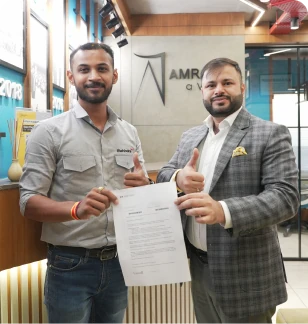
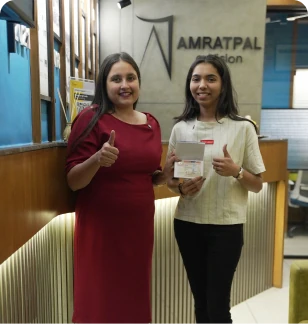
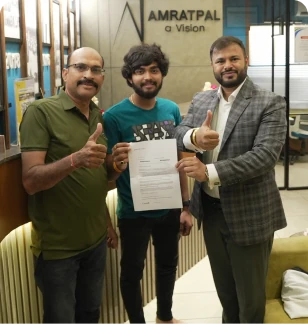
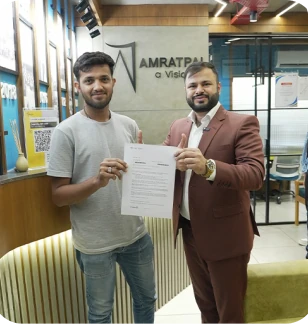
Every student featured here has given written consent to share their story. And as always, individual results vary: past outcomes are shared to give you a sense of what's possible, not a promise of the same result for everyone.


The Case for Germany
Every family asks the same first question: is Germany worth it? Four reasons students pick it.

Rankings
TUM, LMU Munich, Heidelberg University and Freie Universität Berlin sit in the QS global top 100.
Cost
A few exceptions: Baden-Württemberg charges non-EU students €1,500 per semester, and TUM also charges them. Everyone pays a semester contribution.
Work
Your student residence permit allows 140 full days or 280 half days of work a year.
After Graduation
Eligible graduates get up to 18 months to find a job in their field and are allowed to work during that time.
Your Germany Plan
Eight steps, in the order you'll take them. Read straight through, or skip to the step you're on now.
Which Pathway Can I Take?
Studienkolleg, Bachelor's, Master's, MBBS
Which Course Should I Study?
Popular subject areas
Which University Should I Choose?
Public, private, or TU9
Do I Need to Learn German?
How much German is enough
When Should I Apply?
Winter or summer intake
How Do I Apply?
The application steps
How Much Will It Cost?
Fees and living costs
What Documents Do I Need?
For the student visa
Step 1 · Which Pathway Can I Take?
How you get into Germany comes down to one thing: the certificate in your hand right now. There are four main routes. Find yours below.
ROUTE 1
Your school certificate isn't enough for direct entry? Then you'll do Studienkolleg first, pass its final exam, and move on to your Bachelor's.
ROUTE 2
Have A-Levels, the full IB Diploma, or a similar certificate? Then you skip the preparatory course and apply straight to a Bachelor's program at a German university.
ROUTE 3
For future doctors. Classes are in German, the course runs 6 years and 3 months, and places are hard to win. You need top grades and German at C1 before you apply.
ROUTE 4
Already have a recognized Bachelor's? Then the subjects and credits on your transcript decide which Master's programs suit you. Most programs run for two years, taught in English or German.
ROUTE 1 · PREPARATORY YEAR (STUDIENKOLLEG + BACHELOR'S)
If your school certificate doesn't give direct entry to a Bachelor's, this is where you start.
Studienkolleg is a preparatory course that prepares you for a German Bachelor's when your school certificate isn't enough for direct entry. It is the common first step for students from India, Pakistan, Bangladesh, Nepal, China, Vietnam, and some Gulf countries.
Students whose school qualification is recognized for preparatory study but not for direct entry
Indian board students with 70%+ in Class 12, no prior university study
Students with a US high school diploma, SABIS, BTEC, or another 12-year curriculum
German comes first. B1 is technically enough on paper, but most public Studienkollegs want B2 in practice, so aim there. Next comes the entrance exam (Aufnahmeprüfung), and choosing the stream that fits your degree.
Duration
2 semesters (9 months)
Language
German
Entry
Aufnahmeprüfung at public Studienkollegs
Ends with
The FSP, recognized across Germany
Tuition
None at public Studienkollegs
Interactive tool
Not sure if you need Studienkolleg?

Students from India, Pakistan, Bangladesh, Nepal, China, Vietnam, and the Gulf often ask us this. Our tool answers it in four questions.
Full Guide
Focus courses, the Aufnahmeprüfung, the FSP, and costs. The full route in one guide.
Route 2 · After Class 12
If your school certificate is accepted directly, you skip the preparatory course and start here.
Duration
6 to 8 semesters (3 to 4 years)
Language
Mostly German; English-taught options exist
Entry
Direct, or after Studienkolleg
Tuition
None at most public universities
The first university qualification after school. Whether you enter directly depends on your school-leaving qualification. If it isn't recognized for direct entry, Studienkolleg closes the gap.
A-Level students with at least three independent A-Levels at grade C or better
IB students with the full Diploma, with six subjects and at least 24 points
Indian board students with 70% in Class 12 plus one year of a recognized Bachelor's, or with a JEE Advanced rank and at least 70% in Class 12
German-taught programs: you'll show your German level through TestDaF, DSH, or similar.
English-taught programs: your English matters. Most need no German for admission.
IELTS: accepted by most English-taught programs, but every program picks its own minimum score.
TestAS: an aptitude test some universities require and others recommend.
APS certificate: required if your school certificate is from India.
Interactive tool
German Grade Calculator
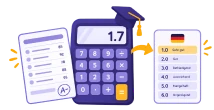
Convert your Class XII marks into a German grade.
Full Guide
Check whether your board, marks, and subjects give you direct entry.
Route 3 · Medicine
If medicine is your goal, the route works differently from every other course.
Germany has no MBBS degree. Public universities teach Human Medicine (Humanmedizin) in German and end with the State Examination (Staatsexamen). It's the hardest route to get into.
Top grades, around 90% in Class 12, three A*s at A-Level, or 42+ IB points
German at C1 level
For most international students, the Studienkolleg M-Kurs before applying
Good grades alone won't get you in. Starting German from zero? Expect years of learning before you're ready to apply. If this route doesn't fit your profile, we'll tell you early.
Duration
6 years and 3 months
Language
German
Entry
Directly, or after the Studienkolleg M-Kurs
Ends with
The State Examination (Staatsexamen)
Tuition
Highly competitive; extra criteria by university
Interactive tool
Studienkolleg Eligibility Tool

Check whether your route to medicine runs through the M-Kurs.
Full Guide
The honest picture of Human Medicine in Germany, before you spend years in Germany.
ROUTE 4 · AFTER A DEGREE
If you already hold a Bachelor's degree, your route runs here.
The most popular route for students continuing after a recognized Bachelor's. How closely your previous degree matches the program decides it, and every university sets its own bar.
Anabin recognition of your university and degree
A subject and credit (ECTS) match with the program
Your grades, English or German level, and any program-specific tests
You need an APS certificate. From the Summer Semester 2027 intake, if your Bachelor's is in certain subjects, the dMAT (digital Master Test) is included in your APS documents. There's no pass or fail, and it doesn't replace Anabin recognition.
Duration
2 to 4 semesters; most run 4
Language
English or German, by program
A recognized Bachelor's degree that matches the program
Entry
Key document
APS, and the dMAT where it applies
Tuition
None at most public universities; some states and universities charge non-EU students
Interactive tool
dMAT Eligibility Tool

See whether the dMAT applies to your degree.
Full Guide
APS, Anabin, ECTS and the dMAT. Know where you stand before you apply.
Each university has its own entry rules, and those rules change. We check your profile against the ones in place when you actually apply.
Bachelor's, Master's, Studienkolleg or medicine, we assess the profile you actually have.

SPECIAL SECTION · FOR INDIAN BOARD STUDENTS
One set of rules applies only to Indian board students. Read it before you plan any of the routes above: the 70% rule for a Bachelor's, and the APS for every Indian academic document.
You have 70% or more in Class 12. You learn German, write the Aufnahmeprüfung, do the Studienkolleg, pass the FSP, and start your Bachelor's.

You have 70% in Class 12 and one year of a Bachelor's in India with a good percentage. That makes you eligible to apply for a direct Bachelor's, with no Studienkolleg.

You cleared Mains and Advanced and hold a rank in Advanced. Then you apply for a direct Bachelor's regardless of category, with a minimum of 70% in Class 12, without doing a Studienkolleg.

If you are from India, you need 70% in Class 12 to go to Germany for a Bachelor's. Without 70%, you will not get the APS. Without the APS, a German Bachelor's is closed to you. This minimum applies to Indian board students only. It is not a global rule. The APS itself applies to students from India, China, and Vietnam.
Your Class 10 and Class 12 documents are verified by APS India in New Delhi, not in Dubai and not elsewhere in the Gulf. Families in the UAE often get this wrong and lose weeks. Master's applicants with Indian degrees need the APS too, and from the Summer Semester 2027 intake, the dMAT is part of the APS documents for certain subject groups.

Short answer: Sometimes. There is no universal cut-off for Germany, but one rule is fixed for Indian board students: 70% in Class 12 for the Bachelor's routes.
Bachelor's: below 70% in Class 12, the APS routes to a German Bachelor's are closed. Completing a full Bachelor's in India and then applying for a Master's is a different route, and this rule doesn't apply in the same way.
Backlogs: cleared backlogs matter less than the subjects and credits on your final transcript.
Master's: each university sets its own grade requirement. A lower percentage narrows your list of universities rather than closing it. For the strongest chances, we recommend a German grade of 2.5 or better.
We check this honestly before you spend money on applications.

Short answer: It depends on the university and program. Some accept a recognized three-year degree as is. Others ask for specific credits or four years of study.
Your transcript decides it, case by case: your subjects, your credits (ECTS), and your university's Anabin status.
Indian degree holders also need the APS, and from the Summer Semester 2027 intake, some need the dMAT.
Two programs at the same university sometimes answer this differently, so read each program's admission rules.

Short answer: Anabin is Germany's official database that tells you if a foreign university and its degrees are recognized there. The ZAB (Central Office for Foreign Education) runs it for the KMK, Germany's conference of education ministers.
H+ means the institution is recognized in Germany. H+/- means recognition depends on the case, and H- means it is not recognized.
This is the "Anabin Verified" in our method: every university on your shortlist is checked before it reaches you.
Universities check recognition when they assess your application, so a Master's plan starts here.
Step 2 · Which Course Should I Study?
You know your pathway. Now pick a subject. Engineering, computer science, business, data science, life sciences: German universities teach them all with close ties to industry. Plenty of courses build in internships, lab projects, or a practical semester.
Full Guide
Engineering, AI, business, medicine and more. See what each course asks of you.
A Counsellor will connect with you shortly to discuss your course details.
We call you back between 9:30 AM and 6:30 PM IST, Monday to Saturday.
STEP 3 · WHICH UNIVERSITY SHOULD I CHOOSE?
You know your pathway and your course. The next question is where to study it. Start with the three types of university, then the names.
Research-led
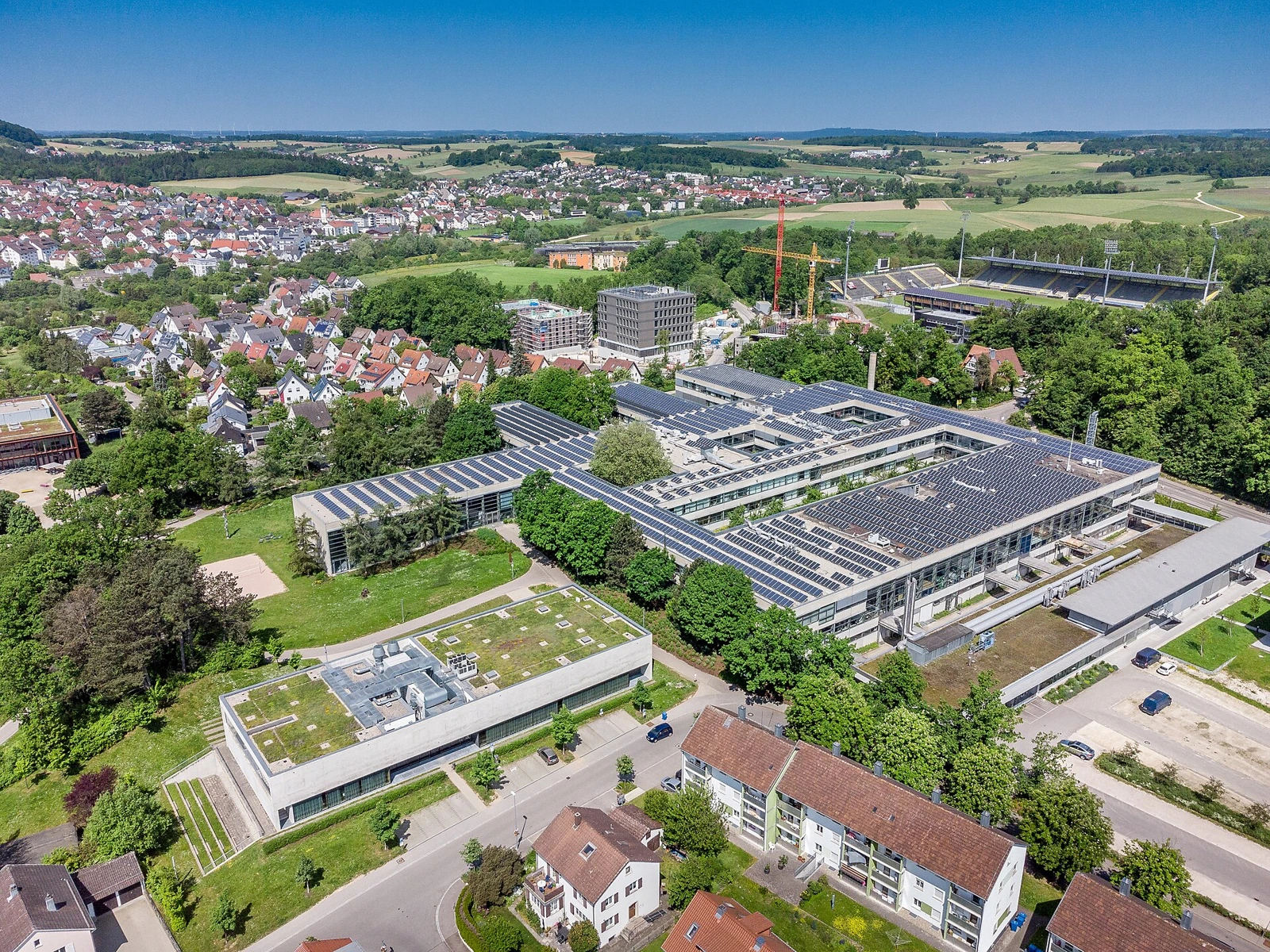
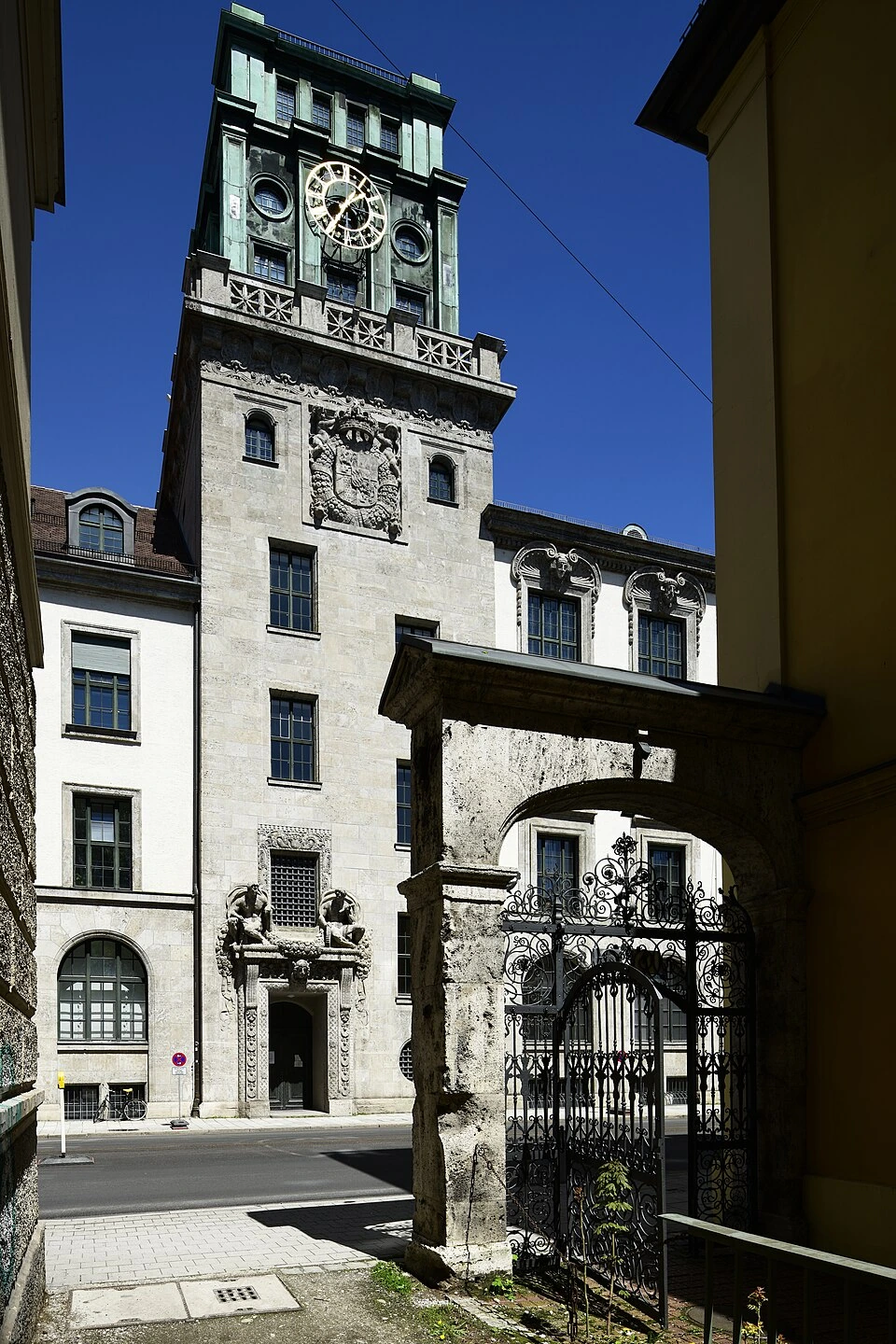
Engineering & Tech
Career-led
Public Options
All ten of Germany's highest-ranked universities in the QS World University Rankings 2027 are public. Most of them charge no general tuition. The exceptions: Heidelberg and KIT, both in Baden-Württemberg, charge non-EU students €1,500 per semester, and TUM also charges tuition to non-EU students.










Every public university and university of applied sciences in Germany, grouped by state, in one PDF.

Every public institution in Germany in one list, sorted by state. The QS 2027 top 10 are marked, with notes where non-EU students pay tuition.
Private Options
Private universities rarely appear in global rankings, so this is not a ranking. Most of these award German degrees. UMCH, Arden University, and BSBI award foreign degrees, so check who awards your degree before you apply. They all charge tuition, and we always recommend public universities first.













“What should I ask before I pay a private university? " Is my degree awarded by you, as a German state-recognized degree, or by a foreign partner university?" Many private institutions that advertise to Indian and Gulf students award a foreign partner's degree while you study in Germany
Every state-recognized private and church-run institution in Germany, in one PDF.
All 129 state-recognized private and church-run institutions, including private universities of applied sciences, with city, state, and what to check before you pay.
TU9 Alliance
Nine of Germany's leading technical universities work together as the TU9. Every one is public, and each is a solid pick for engineering, tech, or computer science.



“What should I ask before I pay a private university? " Is my degree awarded by you, as a German state-recognized degree, or by a foreign partner university?" Many private institutions that advertise to Indian and Gulf students award a foreign partner's degree while you study in Germany
Get all nine TU9 universities in a PDF, with cities and non-EU fees.
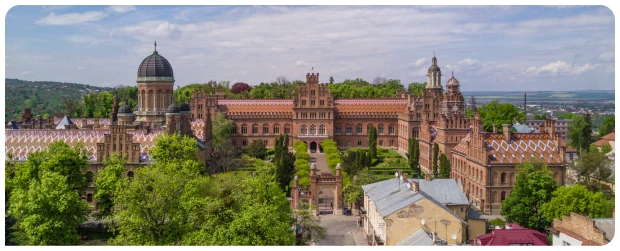
See what each TU9 university is known for, and where non-EU students pay fees.
Full Guide
Public, private, TU, or FH? See where your profile fits before making a shortlist.
Step 4 · Do I Need to Learn German?
Whichever city you pick, your German shapes what your degree delivers.
Even on an English-taught program, German decides your part-time work, internships, and first job. Start early — zero to B2 takes several months of sustained work.
Join a single demo class first. Native teachers run our in-house course from A1 to B1, and one session shows you how we teach and what level you need.
STEP 5 · WHEN SHOULD I APPLY?
Route chosen, shortlist made, German underway? Now let's talk timing.
Winter gives you the widest choice of programs. Deadlines vary between universities, so check the date on your course page. Begin planning 12 to 18 months early.

Short answer: Plan on 12–18 months from your first session to landing in Germany.
Going from zero to B2 in German takes several months of steady study, and you'll do it alongside school and everything else.
Applications, results, the blocked account, and visa appointment availability all add time, and each depends on bodies outside our control.
Starting one intake early is the single most useful thing you will do.
APS verification takes several weeks, and longer during peak season.
STEP 6 · HOW DO I APPLY?
Here is how those months turn into an application, from checking your route to enrolling in Germany.

Direct entry, Studienkolleg, Master's, or medicine, decided by your qualification.

The APS for Indian qualifications, plus language certificates.

The APS for Indian qualifications, plus language certificates.

Through the university portal or uni-assist, before the deadline.

Blocked account, health insurance, and the national study visa.

Anmeldung, residence permit, and university enrollment.
Full Guide
Portals, uni-assist, documents, and deadlines, step by step, so nothing gets missed.

Short answer: uni-assist is a first checkpoint. Many German universities use it for international applications, but the university still makes the final decision. Your course page says if you need it.
Some universities want your application through uni-assist; others through their own portal. Check your course page.
uni-assist charges a processing fee, and processing takes several weeks, so submit well before the deadline.
A file with a missing document goes back into the queue. Send it complete the first time.
Step 7 · How Much Will It Cost?
An admission letter comes with enrollment costs. Here is what to budget, including the proof of funds your visa needs.
These are university, government, and living costs in Germany, not AAV's service fee, which is shown separately in your local currency.
Interactive tool
Full Guide
Rent, insurance, semester fees and the blocked account. Plan your real monthly number
Read moreFull Guide
DAAD, Deutschlandstipendium and more. See which ones fit your profile.
Read moreStep 8 · What Documents Do I Need?
Offer and funding in place? Then the visa is your final step before flying out.
Coming from outside the EU? You'll apply for a national study visa. You'll need to gather these key documents:
The German mission handling your application sets the final list, so check it point by point before your appointment.
The offer letter from your recognized German university.
Check it meets the rules of the German mission processing your file.
Needed if your academic papers come from India, China, or Vietnam.
€11,904 in a blocked account for year one (the 2026 figure), or other financial proof the mission accepts.
Make sure it covers you from the very day you fly.
Whichever English or German test result your program requires.
Every past certificate and mark sheet, plus certified translations where they're required.
TestAS if your Bachelor's program wants it; the dMAT if you're an Indian Master's applicant from the Summer Semester 2027 onward.
Our Visa Support
The right documents are the first step. Before your application reaches the German mission, we run six checks with you.
Visa decisions rest with the embassy, not AAV. Our job is building the strongest application.
Every required document, checked before you submit.
We help you set up your blocked account properly.
You explain your course and career plans in your words.
Verification and university recognition, confirmed early.
We go over your VFS or mission appointment together.
Practice interviews help you answer calmly and confidently.
Full Guide
Documents, appointment and interview, plus the mistakes that cost students weeks.
After Graduation
The degree is the start. Here is what it opens up once you graduate.
Job Search
18 Months to Find Work
A residence permit to find qualified employment in your field.
Salary
€55,000–€70,000 a Year
A rough gross range for Bachelor's and Master's graduates, shaped by your field, city, and German.
Residence
EU Blue Card and Settlement
A settlement permit after around 21 months (Blue Card) or 2 years of skilled work.
Citizenship
From 5 Years
Of lawful residence. The three-year fast track was abolished in October 2025.
Full Guide
Werkstudent jobs, the 18-month job search and the Blue Card. Plan the career, not just the degree.

Short answer: In some cases, yes, through a family reunion visa. It is a separate application from your student visa, with its own requirements.
Family reunion has its own financial and housing requirements, which vary by case.
Plan it alongside your studies, not after, so your finances cover both
Full Guide
Amratpal A Vision handles family reunion and spouse visas too. See what your family needs.
Read moreUse Our Tools
You have seen all nine steps. Now get your own answers before you speak to us: four quick tools, with results to bring to your session.
For Class 12 students

Studienkolleg Eligibility Tool
Answer four short questions and see whether you enter a Bachelor's directly or need Studienkolleg first.
What I get: My route and my focus course
For Bachelor's and Master's

German Grade Calculator
Enter your Class XII or degree marks and see them on the German grading scale universities use.
What I get: My marks as a German grade
For Indian degree holders

dMAT Eligibility Tool
Check whether the dMAT is part of your APS documents for a Master's from the Summer Semester 2027 intake.
What I get: A clear yes or no for my degree
For families planning finance

Education Loan EMI Calculator
Enter a loan amount, interest rate, and term, and see the monthly EMI before you speak to a bank.
What I get: My monthly EMI
PAID BY YOU, NOT BY UNIVERSITIES
Plan every step yourself if you prefer. If you want someone to plan it with you, here is how we work and who pays us. Most consultancies work for universities. We work for families. Our fee is the only money we earn, so our advice is built around your profile, not around who pays us. Many consultants stop at the easy cases. We're one of the largest pathway providers in the industry, so we take on the tough files too and dig into every detail. Studienkolleg, Bachelor's, Master's, or Medicine, we help with all of it.
University commissions
Offices: Ahmedabad, Dubai and Berlin
German universities visited by our team
German classes, taught in-house
This compares two business models, not any named company. Universities decide admission and embassies decide visas; no consultancy is in a position to promise either.
Talk to a counsellor about your marks, subjects, and budget, and get a clear next step.
We call you back between 9:30 AM and 6:30 PM IST, Monday to Saturday.
In 2010, I left India to study Environmental and Resource Management at BTU Cottbus.
FOUNDER · FIRST-HAND GERMANY EXPERIENCE

I trusted the wrong consultant first and paid for it. Amratpal A Vision is the consultancy I wish had existed when I was eighteen. My team and I have visited more than 50 German universities, and we meet our students on the ground in Germany.
Amratpal Singh Sohal · Founder & Director
Memoranda of Understanding
We have an MoU with each institution below. That doesn't mean they admit you automatically. Each one still sets its own requirements and makes its own decision. It doesn't change our advice either: we recommend what fits your profile, MoU or not.
Berlin
Aachen
Saarbrücken
Paderborn
Recognition from institutions and industry bodies we work with in international education.
 2025
ICEF
Industry accreditation for international student recruitment agencies.
 2025
Studienkolleg Paderborn
Award from the Internationales Studienkolleg at the University of Paderborn.
 2024
ISM – International School of Management
Recognition from ISM Germany.
 2024
Expatrio
Recognition for supporting students relocating to Germany.
Smart. Safe. Scientific.
We are one of the largest pathway providers in the industry, and complex cases do not scare us. We work harder to help you secure your future, and because we work for families, not universities, our German shortlist stays honest. Public First. Anabin Verified. Profile Aligned.
COMMON QUESTIONS
Mostly, yes, at public universities. The exceptions are Baden-Württemberg, where non-EU students pay €1,500 a semester, and TUM. You still pay a semester contribution and your living costs.
You have four options: Studienkolleg, a Bachelor's, a Master's, or Human Medicine, which most people know as MBBS. What you've already studied decides where you begin.
Germany has no MBBS. Instead, public universities teach Human Medicine in German. The course takes 6 years and 3 months, with the State Examination at the end. Expect to need top grades and C1 German; most international students do the Studienkolleg M-Kurs first.
Yes, if your program is in English. Outside lectures, you'll want German for everyday life, part-time work, and job hunting. And Studienkolleg and Human Medicine are German-only.
Only if your program asks. Programs choose their own English tests and scores.
APS verifies certificates from India, China, and Vietnam. Indian students need it for both a Bachelor's and a Master's, so start early.
The dMAT (digital Master Test) is an aptitude test run by g.a.s.t. From the Summer Semester 2027 Master's intake, it is part of the APS documents for Indian applicants whose Bachelor's is in certain subject groups. There's no pass or fail, and Anabin recognition still matters.
€11,904 for one year, the amount in force in 2026. Once you arrive, you receive €992 a month.
Yes. Your student permit lets you work 140 full days or 280 half days each year.
No, and no honest consultancy does. Universities decide admission and the embassy decides the visa. We commit to the strongest possible application.
Because the ones that charge nothing are paid by universities, per student placed. You pay ours. That is why we tell you when your marks are short, or when a university on your list isn't worth the money.